
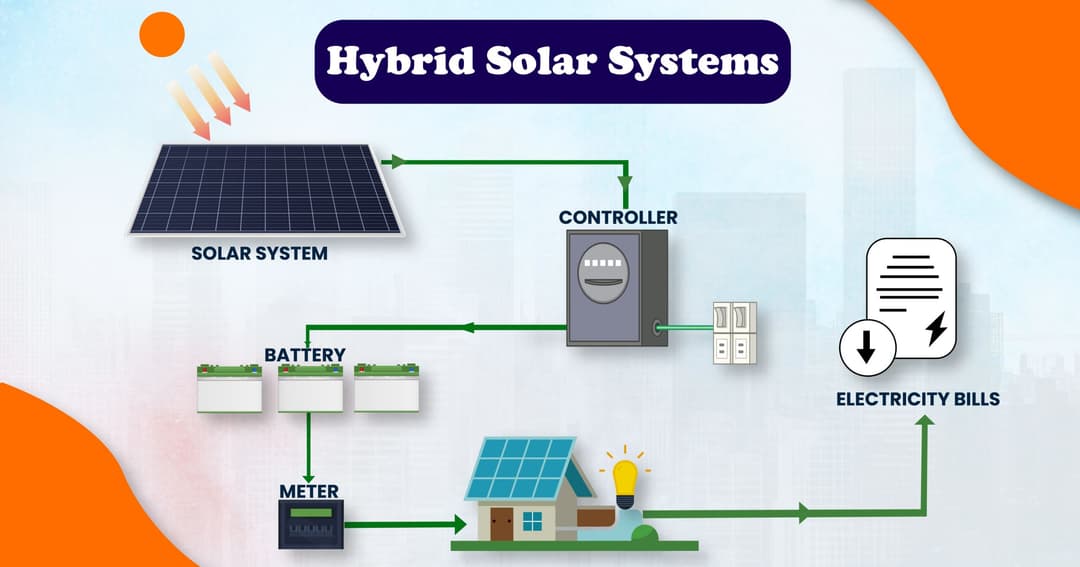
The hybrid solar energy system is a combination of On-Grid and Off-Grid based solar energy systems. In simple terms, one can define it as a grid connected solar power system with a battery backup added. It comes with the advantage of storing energy in the battery when the solar panel operates at its peak and retrieving the stored energy during peak evening hours when electricity rates are high or in case of any grid failure. Also, one can sell the surplus energy generated to the local grid-connection and get paid for the same.
Seamlessly engineer high-quality testing procedures vis-a-vis seamless data. Continually incubate effective customer service vis-a-vis out-of-the-box ROI. Progressively incubate resource sucking functionalities without integrated.
Advantages:
- Reduced grid dependency
- Hybrid inverters come with backup power capacity thus providing uninterrupted power under any circumstances. It allows consumers to consume power from grid, battery or solar.
- It can be used as an off-grid solar energy system in case of power failure.
- Can retrieve stored energy during cloudy weather or peak evening time (when tariff rates are high) thus saving the electricity bills
Components of the hybrid solar system:
- A hybrid energy system combines the on-grid and off-grid components. The following components are used while installing the hybrid solar system at your home or a commercial location:
- Solar Panel: Solar panel forms the base of the solar energy system without this the powerful solar radiations cannot be extracted and used. The solar radiation in the form of photons falls on the solar panel and generates electricity in the form of DC energy.
- Direct Current Distribution Box (DCDB): DCDB is a combiner box, its primary function is to combine the multiple strings of solar panels into one. This box consists of protection components such as a miniature circuit breaker (MCB), fuse and surge protection device.
- Charge Controller: This component is assembled with the battery to control the amount of charge streaming into the battery. The major task of the controller is to regulate the flow of charges and prevent the battery from over or undercharging, thus increasing the lifespan of the battery.
What happens when a power outage occurs?
During daytime when the solar panel is in operation and suddenly if the grid failure occurs the solar power system won’t shut down. Instead, the system will isolate the grid supply and switch on to the battery system, it will retrieve the required power for all the appliances from the battery stored energy.
During the power outage, one must take care that the power consumed by all the appliances must be less than the inverter wattage.